
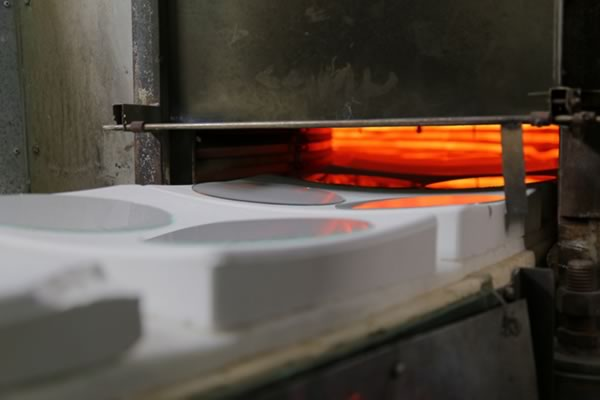
Squeezing High-Density Infrared Heat into Mobile Glass Brackets
When you’re trying to jam a high-performance heater into a mobile glass repair bracket, you’re basically fighting for every single millimeter. It’s a tight squeeze. You can’t just throw in a bulky heater and hope for the best, especially when you’re dealing with strict voltage limits. That’s where shortwave infrared (SWIR) comes in. It gets the heat directly into the coating fast, without turning the entire bracket into an oven. The battle with power density To get things drying quickly in a mobile rig, it’s all about how much wattage you can pack into every inch. We use shortwave quartz lamps because they concentrate energy into a narrow spectrum that the glass coating just drinks up. Now, if your voltage is limited, we don’t just guess. We tweak the filament thickness and length until we hit that sweet spot—enough heat to do the job, but not enough to blow a fuse. But here’s the catch: more power means the lamp gets scorching hot. You’ve got to make sure your housing can breathe and shed that heat, or you’ll end up with a warped frame. Not a great look. The nitty-gritty of the hardware We keep the wiring lean with miniature connectors. No one wants a clunky junction box getting in the way when they’re trying to work quickly. We also use a quartz envelope because it handles “thermal shock” (rapid temperature swings) without cracking. And since these brackets are moving and vibrating in a van or on a job site, we don’t use rigid clamps. Those are just waiting to snap the glass tube. We keep the mounts secure but flexible. The trade-offs you should know about Shortwave IR is incredibly fast. It ramps up almost instantly. But that intensity means you have to be precise. If the lamp is a hair too close, you’ll scorch the coating. Too far? Your curing time doubles, and you’re just wasting time. You’ll want to spend a little time calibrating the distance based on how thick your coating is. Once you find that magic gap, it just works.