
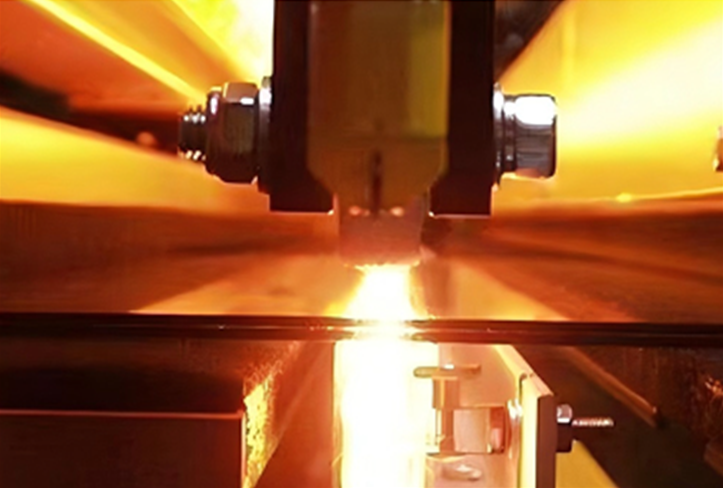
Getting Glass Annealing Right (Without Stopping the Line)
When you’re annealing glass on a live production line, you’re basically playing a high-stakes game of temperature control. You have to kill those internal stresses, but you can’t exactly just hit the pause button on the whole factory to do it. That’s where fast-response IR lamps and gold reflectors come in.
Why gold? (No, not for the looks)
You might be tempted to go with standard aluminum reflectors, but here’s the problem: they soak up too much energy. It’s wasteful. We use gold-coated reflectors because they bounce over 98% of that infrared radiation straight back at the glass. It concentrates the heat exactly where you need it. You get a much tighter heat profile, and you aren’t wasting energy heating up the furnace chassis. It keeps the whole setup compact, but the surface temperatures stay exactly where they need to be.
Speed is everything
Traditional heating elements are slow. They take forever to ramp up. IR lamps? They’re almost instant. If your line speed shifts, the IR system adjusts the heat load in a matter of seconds. That’s the difference between a perfect piece of glass and one with optical distortions because it cooled too fast or got scorched. Now, a quick heads-up: we usually pair these with high-density power supplies to make sure the heat actually gets through the thickness of the glass. But that creates a lot of heat in the housing. If your cooling fans aren’t up to the task, you’re looking at melted wiring or fried sockets. Don’t skimp on the ventilation.
Keeping things moving
The best part about this setup is that you can ditch the batch lehrs entirely. Instead of that clunky stop-start rhythm, you’ve got a continuous stream of glass moving through the flow. It’s way safer. Less handling means less chance of something shattering during a transfer. We usually wire these into a closed-loop PID controller. It just handles the soak temperature for you, regardless of how thick the glass is. And if a lamp happens to pop? The gold reflectors are efficient enough that the remaining units can usually carry the load, keeping the line moving until you can swap out the tube.